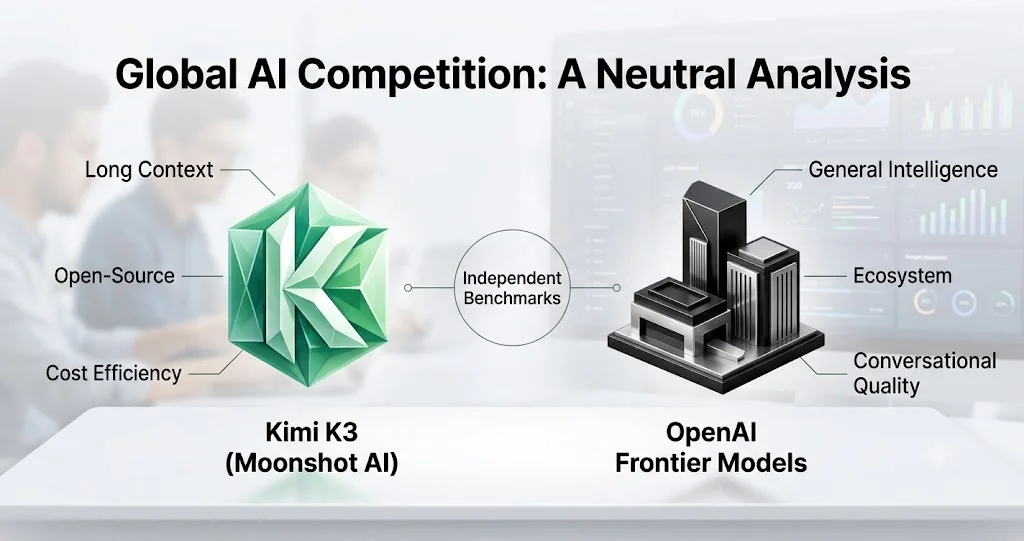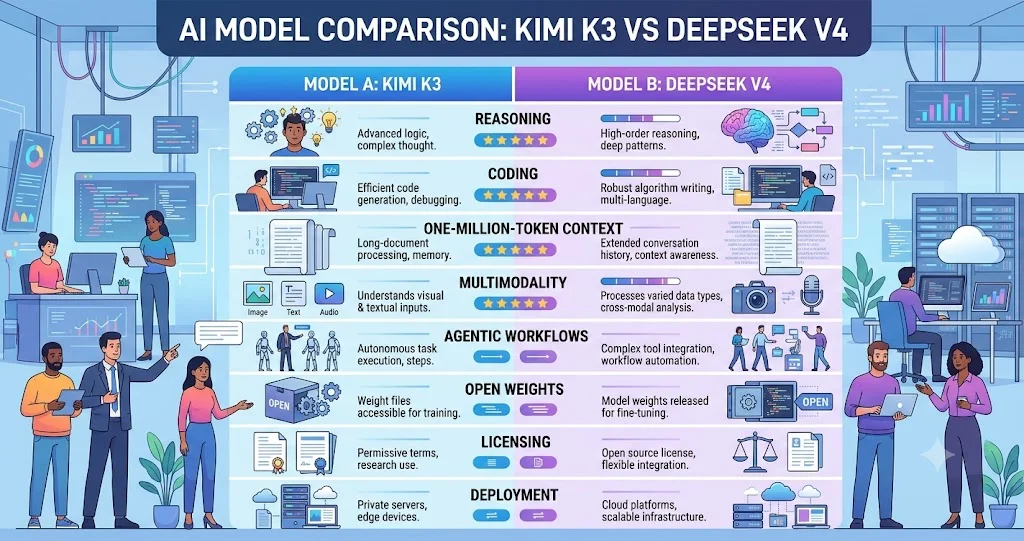

Artificial intelligence assistants have become essential tools for information processing and task automation. Two notable options are Kimi AI, developed by Moonshot AI, and ChatGPT, created by OpenAI. This review offers an objective comparison to help readers understand their differences, strengths, and limitations, without endorsing either product.
Overview of Kimi AI and ChatGPT
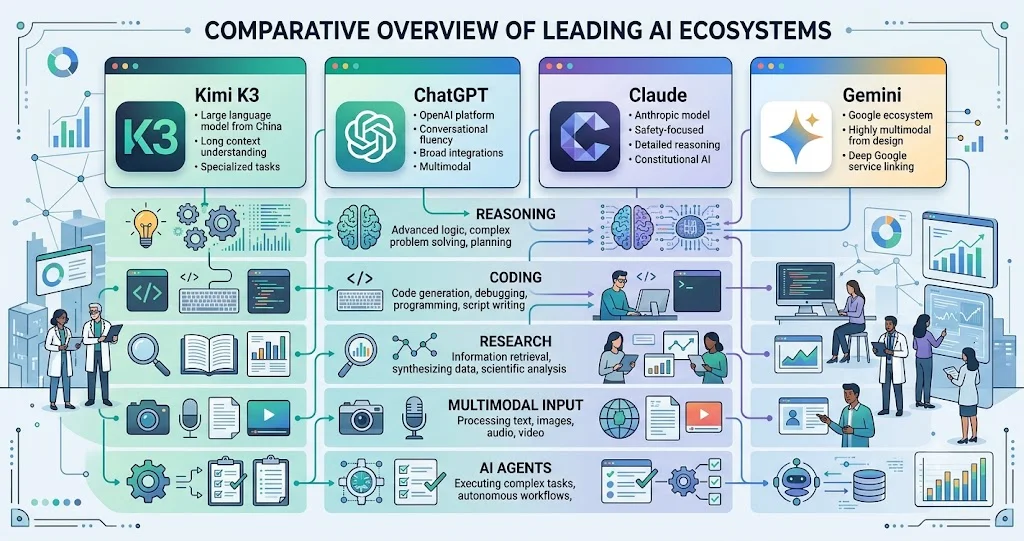
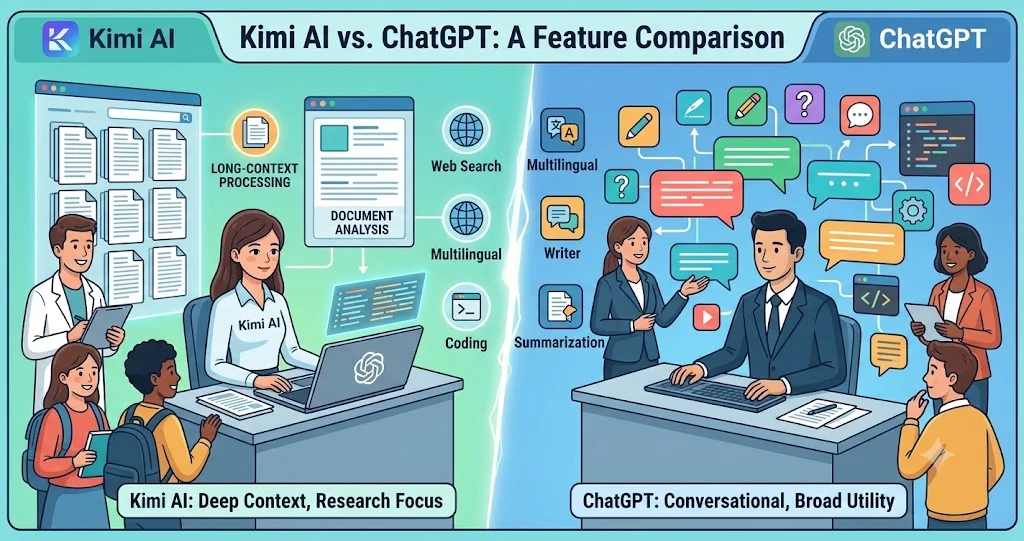
Kimi AI is an AI assistant known for its long-context processing and document analysis capabilities. ChatGPT is a widely used conversational AI model with a broad range of applications. Both leverage large language models but have distinct design philosophies and feature sets.
Kimi AI at a Glance
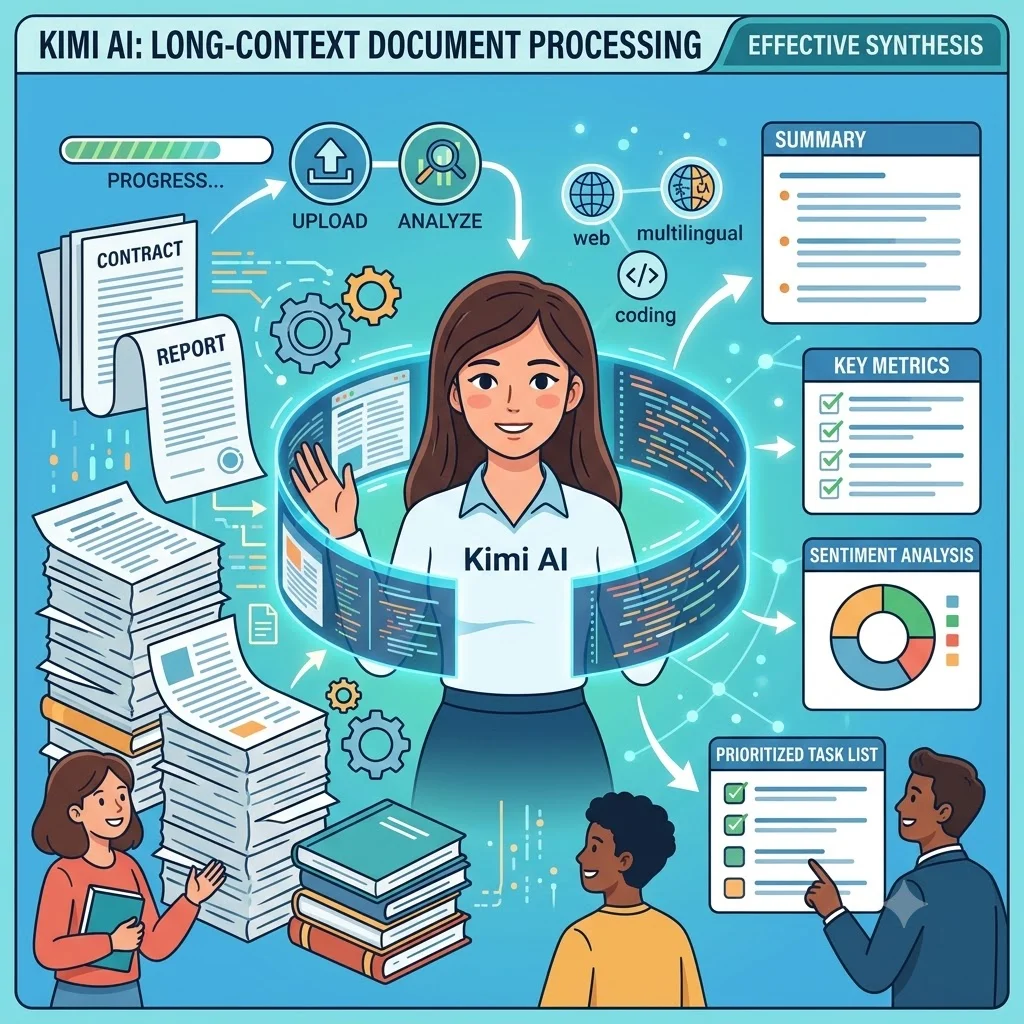
Developed by Moonshot AI, Kimi AI emphasizes handling extensive text inputs, making it suitable for research and data-heavy tasks. Its interface supports file uploads, web search, and multilingual interactions, with a focus on comprehensive information synthesis.
ChatGPT at a Glance
ChatGPT, from OpenAI, is renowned for its conversational fluency and versatility. It excels in natural dialogue, creative writing, and general knowledge queries, with continuous updates enhancing its reasoning and multimodal capabilities.
Key Features Comparison
Understanding the feature sets of both assistants is essential for evaluating their suitability for different tasks.
- Context Window: Kimi AI offers a larger context window, allowing it to process and retain information from very long documents. ChatGPT has a context window that has expanded over time but may be smaller in some versions.
- File Upload: Kimi AI supports uploading multiple file formats (PDF, Word, TXT, images with text). ChatGPT also supports file uploads in certain versions, but capabilities may vary.
- Web Search: Kimi AI integrates web search for real-time information. ChatGPT's web browsing feature is available in some versions but may require enabling.
- Multilingual Support: Both assistants support multiple languages, with varying proficiency.
- Conversational Ability: ChatGPT is often praised for natural, human-like dialogue. Kimi AI is functional but may be more task-oriented.
- Output Format: Both can generate text, summaries, lists, and structured data.
Performance Analysis
Performance depends on the specific use case. Below is a comparative table highlighting key aspects.
| Aspect | Kimi AI | ChatGPT |
|---|---|---|
| Long Document Processing | Excellent; handles lengthy texts seamlessly | Good, but may truncate or lose context with very long inputs |
| Response Accuracy | Generally accurate; best with well-structured inputs | High accuracy on general knowledge; may hallucinate on niche topics |
| Conversational Flow | Functional and clear | Natural and engaging |
| File Handling | Supports multiple formats with OCR for images | Supports uploads in advanced versions; OCR capabilities vary |
| Web Search Integration | Integrated and seamless | Available in some versions; may require manual activation |
| Multilingual Performance | Solid for common languages | Strong for many languages, with nuances |
Benefits and Limitations
Each assistant has strengths and weaknesses that influence user choice.
Kimi AI Benefits
- Superior handling of very long documents and large data sets.
- Efficient file upload and analysis, including images with text.
- Integrated web search for up-to-date information.
- User-friendly interface for research and professional use.
Kimi AI Limitations
- Less conversational flair; may not engage as naturally in dialogue.
- Niche focus may limit general-purpose use.
- Availability and regional access may be restricted.
ChatGPT Benefits
- Exceptional conversational ability and natural language understanding.
- Broad range of applications, from creative writing to coding.
- Continuous updates and community support.
- Strong general knowledge base.
ChatGPT Limitations
- Context window may be insufficient for very long documents.
- Web search and file uploads are not always default features.
- Can produce plausible but incorrect information (hallucinations).
Types of AI Assistants and Market Trends
The AI assistant landscape includes general-purpose chatbots, document-focused tools, and multimodal systems.
General-Purpose Chatbots
These assistants prioritize conversational fluency and broad knowledge, suitable for everyday queries and creative tasks. ChatGPT is a prime example.
Document-Focused Assistants
These tools specialize in processing large volumes of text, making them ideal for research, legal, and academic work. Kimi AI fits this category.
Multimodal Assistants
Emerging tools can process text, images, audio, and video, offering versatile interactions. Both Kimi AI and ChatGPT are evolving toward multimodality.
Current Trends
- Expanding Context Windows: Developers are increasing context capacity to handle longer inputs.
- Integration with External Data: Web search and API connections are becoming standard.
- Personalization: Assistants are adapting to user preferences and history.
- Ethical AI: Focus on reducing bias and improving transparency.
Use Cases and Applications
Choosing between Kimi AI and ChatGPT often depends on the intended application.
When to Choose Kimi AI
- Research and academic work requiring analysis of lengthy papers.
- Legal document review and summarization.
- Business intelligence with large data sets.
- Multilingual document processing.
When to Choose ChatGPT
- General knowledge queries and casual conversation.
- Creative writing, brainstorming, and content generation.
- Coding assistance and technical problem-solving.
- Educational tutoring and language learning.
Selection Checklist for AI Assistants
When deciding between Kimi AI and ChatGPT, consider the following checklist:
- Define your primary tasks: document analysis vs. general conversation.
- Estimate the typical length of your inputs.
- Determine if you need file upload and OCR capabilities.
- Assess the importance of real-time web search.
- Evaluate the need for natural conversational flow.
- Check language support and accuracy.
- Review privacy and data policies.
- Consider platform accessibility and regional availability.
Tips for Using Both Assistants Effectively
- For Kimi AI, upload clear, well-formatted documents for best results.
- Use specific queries to guide Kimi AI's analysis.
- For ChatGPT, provide sufficient context to avoid misunderstandings.
- Verify critical information from both assistants with external sources.
- Experiment with different phrasing to get optimal responses.
- Stay updated on new features and improvements.
Frequently Asked Questions
Is Kimi AI better than ChatGPT?
There is no definitive answer, as it depends on user needs. Kimi AI excels at long-document processing, while ChatGPT offers superior conversational ability. Choose based on your primary use case.
Can Kimi AI replace ChatGPT for general use?
For general queries and casual conversation, ChatGPT may be more engaging. Kimi AI is better suited for specialized document tasks.
Does Kimi AI support image recognition?
Kimi AI can process images containing text via OCR, but it does not have comprehensive image recognition like some multimodal models.
Is ChatGPT available for free?
ChatGPT offers free access with limitations; paid versions provide additional features. Availability may vary by region.
Which assistant is more accurate?
Accuracy depends on the domain. Both can produce errors; verification is recommended for important information.
Can I use both Kimi AI and ChatGPT together?
Yes, users often use multiple assistants to leverage each one's strengths for different tasks.
Are there privacy concerns with these assistants?
Both have privacy policies; users should review them and avoid sharing sensitive information.
Do these assistants support multiple languages?
Yes, both support multiple languages, though proficiency may vary.
Which assistant is better for students?
For research-heavy coursework, Kimi AI's document handling is beneficial. For learning and general study help, ChatGPT is useful.
How do I access Kimi AI?
Kimi AI is accessible via its official platform; check for regional availability.
Conclusion
Both Kimi AI and ChatGPT are powerful AI assistants with distinct strengths. Kimi AI's long-context processing and document analysis capabilities make it ideal for research and professional tasks involving extensive text. ChatGPT's conversational fluency and versatility suit general-purpose interactions and creative endeavors. The choice ultimately depends on individual requirements, workflows, and preferences. By understanding the features and limitations outlined in this review, readers can make informed decisions about which assistant—or combination of assistants—best supports their goals. As AI technology evolves, both platforms will continue to improve, offering even more sophisticated functionalities for users worldwide.