
How to Use AI Without Losing Your Original Writing Style
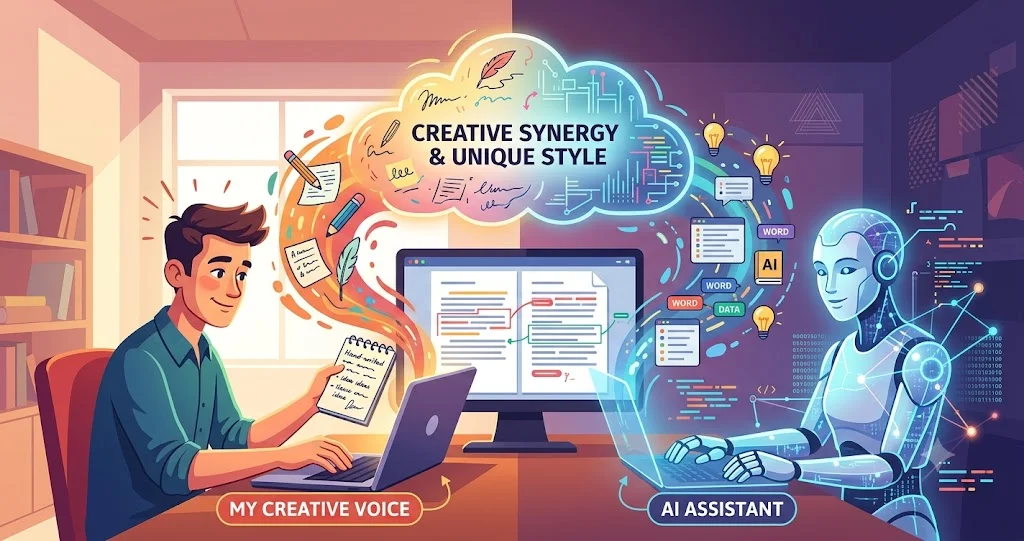
Many writers worry that using AI tools will make their work sound generic or robotic. However, with the right approach, AI can be a powerful assistant that enhances your writing while preserving your unique voice. This guide explores practical strategies for leveraging AI tools without sacrificing your personal writing style.
Introduction: The Writer's Dilemma with AI
The rise of AI writing tools has created a new dynamic for writers. On one hand, these tools offer efficiency, inspiration, and assistance with various writing tasks. On the other hand, there is a legitimate concern that AI-generated content may lack authenticity and personal voice. This guide addresses this dilemma by offering actionable strategies to maintain your original writing style when using AI. The goal is not to replace your writing but to enhance it, allowing AI to handle routine tasks while you focus on the creative and personal aspects that make your writing uniquely yours.
Understanding Your Writing Style
Before you can preserve your writing style, it is helpful to understand what makes it distinctive. This self-awareness enables you to make intentional choices about how to integrate AI.
- Identify Your Tone and Voice: Consider the emotional register and personality in your writing. Is it formal or conversational? Serious or humorous? Authoritative or friendly?
- Analyze Your Vocabulary: Pay attention to the words and phrases you naturally use. Do you favor certain expressions, idioms, or sentence structures?
- Review Sentence Structure: Do you write long, complex sentences or short, punchy ones? Consider your rhythm and pacing.
- Notice Your Organizational Style: How do you structure your arguments or narratives? Do you use particular formatting, headings, or transitions that are characteristic of your work?
Strategies for Preserving Your Voice with AI
These practical strategies can help you use AI writing tools while maintaining your unique voice and style.
- Train AI on Your Existing Work: Feed AI tools samples of your writing. This helps the AI learn your vocabulary, sentence structure, and tone, enabling more personalized outputs.
- Provide Style and Tone Instructions: Use clear prompts specifying the desired style, voice, and tone. For example, indicate the writing should be 'in a conversational tone' or 'with a formal voice.'
- Use AI as a Collaborative Brainstorming Tool: Generate ideas, outlines, and drafts with AI, but then rewrite them in your own voice. Use the AI's output as a starting point for your own creative process.
- Edit Heavily: Expect to edit AI-generated content significantly. Replace generic language with your own phrasing, and adjust the tone to match your authentic voice.
- Focus on the Core Message: Let AI handle the structure and supporting information while you focus on the core narrative and personal insights.
- Set Boundaries for AI Use: Decide what tasks AI will handle and where you will always write yourself. For example, you might use AI for outlines but always write the personal anecdotes and emotional elements.
Techniques for Effective Prompting
The prompts you use significantly impact the quality and relevance of AI outputs. Effective prompting is key to getting results that align with your style.
- Include Personal Examples: If you have a particular phrase or idiom you like, include it as an example in the prompt.
- Specify the Persona: Ask AI to write as a 'knowledgeable professional,' 'friendly expert,' or 'relatable storyteller' to match the tone you want.
- Provide Context and Audience: Explain who the intended reader is. This helps the AI tailor its language and complexity to the appropriate level.
- Iterate and Refine: Don't settle for the first draft. Use iterative prompting to refine the output until it better matches your style.
Benefits and Limitations of AI in Writing
Understanding what AI can and cannot do helps set realistic expectations for its role in your writing process.
- Benefits: AI can increase productivity, overcome writer's block, generate new ideas, help with research, and provide structural support, especially for routine or repetitive writing tasks.
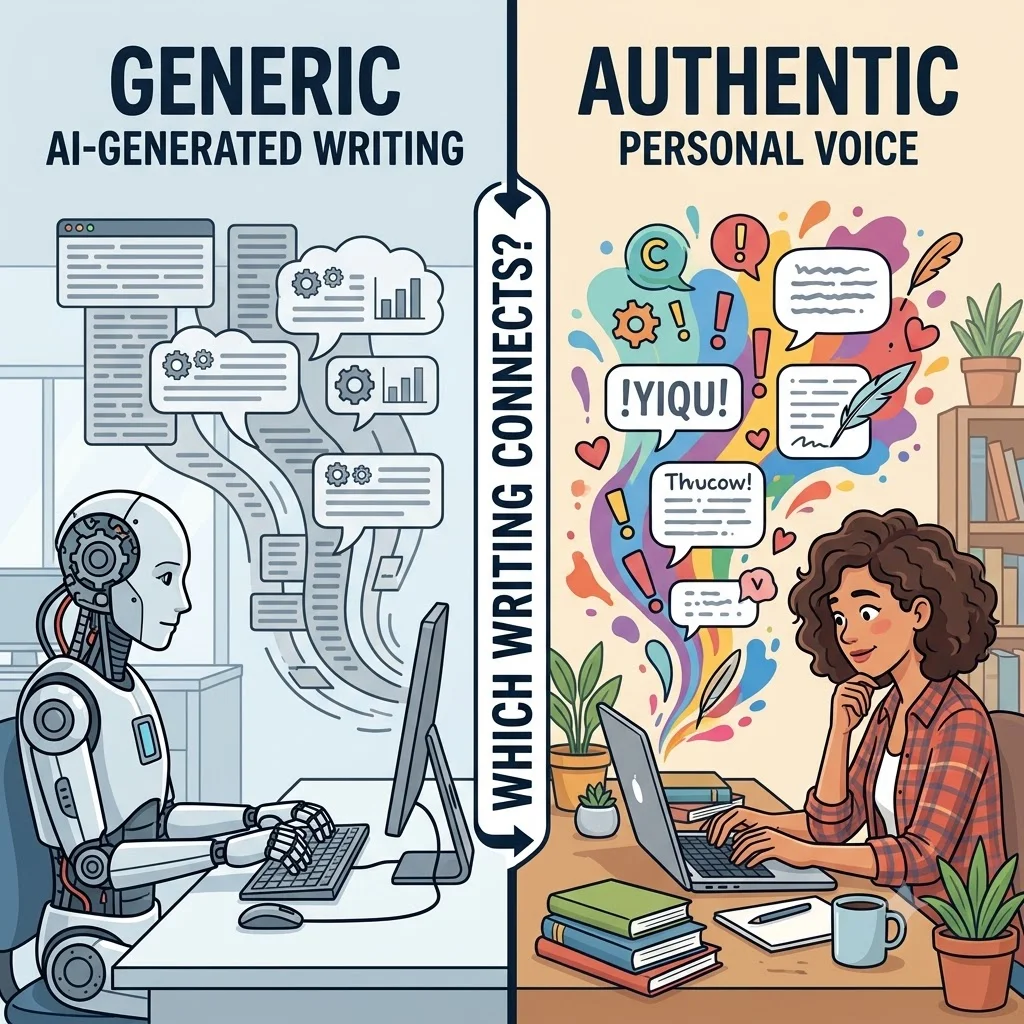
- Limitations: AI lacks the ability to produce truly original, personal, or emotionally nuanced content. It may also lack contextual understanding and risk producing generic or plagiarized-sounding text without careful oversight.
Comparison of AI Writing Tools for Style Preservation
The following table compares different AI writing tools based on their features that support style preservation, helping you choose the right tool for your needs.
| Tool | Style Customization | Learning from Examples | Editing Support | Best For |
|---|---|---|---|---|
| Tool A | High (tone, persona) | Yes | Strong | Creative writers, bloggers |
| Tool B | Medium (basic tone options) | Limited | Moderate | Business writing |
| Tool C | High (custom instructions) | Yes | Strong | All-around writers |
| Tool D | Low (limited control) | No | Low | Quick drafts, ideas |
Checklist: Maintaining Style When Using AI
Use this checklist to ensure you are effectively preserving your writing style when working with AI tools.
- Understand your unique voice: Have you identified the key characteristics of your writing style?
- Train the AI: Have you provided examples of your writing to the AI tool?
- Use specific prompts: Have you included style, tone, and persona instructions in your prompts?
- Edit thoroughly: Are you significantly editing AI output to reflect your authentic voice?
- Keep your core message personal: Are you writing the most personal and insightful parts yourself?
- Review for generic language: Are you replacing AI's generic phrasing with your own words?
Tips for Authentic AI-Assisted Writing
These practical tips can help you integrate AI into your writing process while maintaining authenticity.
- Start with Your Own Draft: Write the first version of your piece before using AI. Then use AI for refinement rather than creation.
- Read Aloud: Read AI-generated content aloud to identify parts that sound unnatural or unlike your voice.
- Add Personal Anecdotes: Include your own stories, experiences, and perspectives that AI cannot replicate.
- Develop a Consistent Process: Establish a workflow that balances AI assistance with your personal writing and editing.
- Trust Your Instincts: If AI-generated text doesn't feel like you, rewrite it.
Frequently Asked Questions About AI and Writing Style
Can AI truly understand my writing style?
AI can analyze patterns in your writing and generate text that mimics those patterns. However, it does not understand the deeper meaning or intent behind your style. It is a tool for assistance, not replacement.
Will AI make my writing sound generic?
AI outputs can sound generic without proper prompting and editing. However, by providing examples, using specific instructions, and editing thoroughly, you can reduce this risk significantly.
How much editing is necessary when using AI?
The amount of editing depends on the task and the quality of AI output. Generally, expect to spend significant effort editing AI-generated content to align with your personal style.
Can I use AI for creative writing without losing my voice?
Yes, but caution is advised. Use AI for brainstorming, outlining, and overcoming writer's block, but write the core narrative and emotional content yourself to maintain authenticity.
What are the best AI tools for style preservation?
Tools that offer high customization, the ability to learn from examples, and strong editing support are generally better for style preservation. Consider features like tone adjustment and persona setting.
Is it ethical to use AI in writing?
It is ethical to use AI as a writing tool, provided you are transparent about your use and ensure the final output reflects your original thinking and voice. AI should be a partner, not a replacement.
How do I avoid AI plagiarism?
Always write from your own perspective, add your own analysis and anecdotes, and use AI as a starting point rather than a final output. Plagiarism is not about the tool but about how you use it.
Can AI help me improve my writing style?
AI can help you become more aware of your patterns and identify areas for improvement by offering suggestions and alternatives, helping you grow as a writer.
Conclusion
Using AI in writing does not have to mean losing your original voice. By understanding your style, providing effective prompts, editing thoroughly, and using AI as a collaborative tool, you can maintain authenticity while benefiting from what AI offers. The key is to view AI as an assistant that supports your creativity, not as a replacement for your unique perspective and voice. With the strategies and tips in this guide, you can harness the power of AI while ensuring your writing remains distinctly yours.