

What Is GEO and Why AI Search Optimization Matters
The way people search for information online is changing rapidly. AI-powered search engines no longer simply return a list of links — they generate direct, synthesized answers drawn from across the web. This shift is giving rise to a new discipline known as Generative Engine Optimization, or GEO. Understanding GEO means understanding how to make your content visible, citable, and trustworthy in an era where AI systems, not just algorithms, decide what information gets surfaced.
Traditional search engine optimization (SEO) focused on helping web pages rank higher in search results through keyword targeting, backlinks, and technical site health. GEO operates on a related but distinct set of principles. Instead of optimizing for a ranked position on a results page, GEO is about becoming a source that AI engines actively draw from when constructing their generated responses. The two approaches overlap in many areas but diverge significantly in strategy and measurement.
Benefits and Limitations of GEO
Like any emerging discipline, GEO offers meaningful advantages alongside real constraints that practitioners should understand clearly before adjusting their content strategies.
Key Benefits
- Increased content authority: Content structured for GEO tends to be more factually rigorous, better organized, and more clearly sourced — qualities that benefit both AI visibility and human readers.
- Broader discoverability: AI search engines pull from a wider range of sources than traditional search, meaning smaller or newer sites may have greater opportunities to be cited if their content is well-structured and accurate.
- Longer content lifespan: Evergreen, authoritative content that AI systems trust can remain relevant longer than content optimized purely around trending keywords.
- Multi-platform reach: GEO-optimized content can appear in answers generated by multiple AI platforms simultaneously, extending reach beyond a single search engine.
Current Limitations
- Measurement challenges: Unlike traditional SEO, where ranking positions are trackable, measuring how often AI engines cite your content is still an evolving area with limited tooling.
- Lack of standardization: Different AI search platforms use different models and criteria for sourcing content, making it difficult to apply a single universal GEO strategy.
- Attribution variability: AI-generated answers do not always prominently credit their sources, which can make it hard to connect traffic or brand awareness directly to GEO efforts.
- Rapidly changing landscape: AI search behavior is evolving quickly, meaning GEO best practices are still being established and refined by researchers and practitioners.
Types of Content That Perform Well in AI Search
Not all content is equally likely to be surfaced by AI search engines. Certain formats and structures tend to align more naturally with how generative models process and present information.
Definitional and Explanatory Content
AI engines frequently answer questions by drawing on content that clearly defines concepts, explains processes, or provides factual overviews. Well-structured articles that answer specific questions directly — without burying the answer in promotional language — tend to perform well.
Structured Listicles and Step-by-Step Guides
Content organized in numbered steps or clearly delineated lists is easier for AI systems to parse and quote. When explaining a process, breaking it into discrete, labeled stages increases the chance that an AI engine will extract and present that information cleanly.
Comparison and Analysis Content
Generative AI systems frequently synthesize comparison information to help users understand differences between options, tools, or approaches. Balanced, neutral comparison content — especially when presented in structured formats like tables — is highly compatible with AI search behavior.
FAQ and Q&A Formats
Content structured as questions and answers maps directly to how conversational AI search interfaces work. Including a dedicated FAQ section in long-form content significantly increases the surface area available for AI engines to match against user queries.
Current Trends Shaping AI Search Optimization
GEO is not a static discipline — it is being shaped by rapid advances in AI capabilities, evolving platform behaviors, and growing practitioner experimentation. Several trends are particularly relevant right now.
The Rise of AI Overviews and Answer Engines
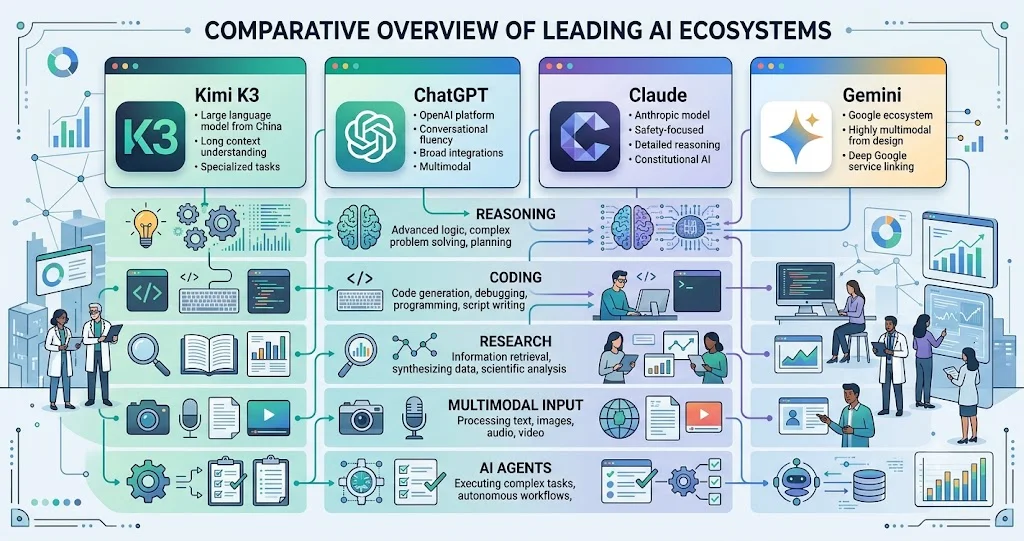
Major search platforms have integrated generative AI directly into their primary search interfaces. Google's AI Overviews, Perplexity's answer engine, and Microsoft Copilot's search integration all represent mainstream adoption of AI-generated answers at scale. This means GEO is no longer a niche concern — it is becoming relevant to any organization with a web presence.
Authority and E-E-A-T Signals
Google's framework of Experience, Expertise, Authoritativeness, and Trustworthiness (E-E-A-T) has taken on new importance in the context of AI search. AI engines appear to favor content from demonstrably credible sources, making authorship clarity, citation of sources, and demonstrated expertise more valuable than ever.
Structured Data and Schema Markup
Implementing structured data markup helps AI systems understand content context more precisely. Schema types like FAQPage, HowTo, Article, and Organization help machines interpret the purpose and structure of content, increasing the likelihood of inclusion in generated answers.
Conversational Query Optimization
Users interacting with AI search tend to phrase queries conversationally rather than using fragmented keywords. Content that mirrors natural language patterns and anticipates how real people phrase questions tends to align better with AI search retrieval behavior.
GEO vs. Traditional SEO: A Comparison
| Dimension | Traditional SEO | GEO (AI Search Optimization) |
|---|---|---|
| Primary Goal | Rank in blue-link search results | Be cited in AI-generated answers |
| Key Signals | Backlinks, keywords, page speed | Authority, clarity, factual accuracy |
| Content Format | Keyword-optimized pages | Structured, semantically rich content |
| User Intent | Matched via keyword targeting | Matched via natural language understanding |
| Measurement | Rankings, organic traffic | Citation frequency, answer inclusion |
| Lifespan | Medium — tied to algorithm updates | Longer — tied to factual reliability |
| Tooling Maturity | Highly developed ecosystem | Emerging, limited standardization |
Platforms and Companies Driving AI Search
Understanding which platforms are shaping AI search helps content creators and strategists prioritize where to focus GEO efforts.
- Google: AI Overviews integrates generative answers directly into Google Search results, drawing on indexed web content using a combination of its language models and search infrastructure.
- Perplexity AI: A dedicated AI answer engine that cites sources in its responses, making attribution more visible than many competitors and rewarding content with clear factual grounding.
- Microsoft Copilot: Integrated into Bing and Microsoft 365, Copilot uses OpenAI models to generate search answers and assist with information tasks across the Microsoft ecosystem.
- ChatGPT Search: OpenAI's search-integrated ChatGPT provides real-time web answers, surfacing content based on a combination of recency, authority, and relevance.
- Apple Intelligence: Apple's AI layer across its devices is beginning to integrate web search capabilities, extending AI search reach into mobile and desktop operating systems.
How to Evaluate Your Content for GEO Readiness
Assessing whether existing content is well-positioned for AI search involves examining it through the lens of clarity, structure, and credibility. The following checklist provides a practical starting framework.
GEO Readiness Checklist
- Does the content clearly answer a specific question within the first two paragraphs?
- Is the author or organization clearly identified with demonstrated expertise?
- Are factual claims supported by cited sources or verifiable data?
- Is the content structured with descriptive headings and subheadings?
- Does the page include structured data markup (Schema.org)?
- Is the language conversational and free of jargon where possible?
- Does the content include a FAQ section with naturally phrased questions?
- Is the content regularly reviewed and updated for factual accuracy?
- Does the page load quickly and perform well on mobile devices?
- Is the content free of promotional or sales-oriented language that reduces perceived neutrality?
Practical Tips for Improving AI Search Visibility
Adapting content for GEO does not require rebuilding everything from scratch. Several targeted improvements can meaningfully increase the likelihood that AI engines draw from your content.
Lead with Direct Answers
AI systems often extract the most direct, concise answer from a piece of content. Structuring articles so that key answers appear near the top — before elaboration or context — increases extractability.
Use Consistent, Clear Terminology
AI language models recognize consistent use of established terminology as a signal of expertise. Avoid inventing jargon and use standard industry terms accurately and consistently throughout your content.
Write for People First, Machines Second
Content that reads naturally and serves genuine human information needs tends to perform well in AI search precisely because generative models are trained on human-readable text. Clarity and usefulness remain the foundation of effective GEO.
Build Topical Depth, Not Just Breadth
AI search systems appear to favor sources that cover topics thoroughly. Rather than producing many shallow articles, developing comprehensive, authoritative coverage of a subject area tends to increase the likelihood of being cited as a trusted source over time.
Frequently Asked Questions About GEO
What does GEO stand for?
GEO stands for Generative Engine Optimization. It refers to the practice of structuring and creating content so that AI-powered search engines are more likely to reference it when generating answers to user queries.
Is GEO replacing traditional SEO?
GEO is not replacing SEO — it is expanding alongside it. Many foundational SEO principles, such as publishing accurate, well-structured, authoritative content, remain important. GEO adds a layer of optimization specifically oriented toward AI-generated search experiences.
How do I know if an AI engine is citing my content?
Tracking AI citations is an emerging area of analytics. Some tools, including newer features in platforms like Google Search Console and third-party AI visibility trackers, are beginning to provide data on AI search appearances. Monitoring branded mentions in AI-generated answers manually is also a common current practice.
Does page speed matter for GEO?
Page speed matters indirectly. AI engines that crawl and index web content benefit from fast-loading pages, and technical site health remains a prerequisite for content to be reliably discovered. However, GEO places greater emphasis on content quality and structure than on pure performance metrics.
Can smaller websites compete in AI search?
AI search creates some opportunities for smaller, specialized sources. Because generative engines aim to provide accurate and comprehensive answers, niche expertise and factual clarity can be more important than domain authority alone. A small site with deeply authoritative, well-structured content on a specific topic may be cited by AI engines even without broad SEO dominance.
How often should GEO-focused content be updated?
AI systems tend to favor content that is current and factually reliable. Content covering evolving topics should be reviewed and updated regularly — at minimum annually, and more frequently for fast-changing subjects. Clear publication and update dates signal recency to both AI systems and human readers.
Conclusion
Generative Engine Optimization represents a meaningful evolution in how content strategy intersects with search visibility. As AI-powered answer engines become a primary information interface for millions of users, understanding how to create content that AI systems trust, parse, and cite is becoming an essential skill for content professionals, marketers, and publishers alike.
The principles underlying effective GEO — clarity, accuracy, authority, and structure — are not fundamentally different from good writing and editorial practices. What has changed is the audience: alongside human readers, AI systems are now evaluating content and making decisions about what information to surface. Meeting that dual standard requires intentional content design informed by an understanding of how generative AI search actually works.
As this field continues to mature, staying informed about platform changes, emerging measurement tools, and evolving best practices will be important. The foundations explored in this guide provide a grounded starting point for anyone looking to navigate the AI search landscape thoughtfully and effectively.