

Introduction to AI Automation for Startups
In today's fast-paced business environment, startups are increasingly turning to artificial intelligence (AI) automation to gain a competitive edge. AI automation offers the promise of streamlining operations, reducing human error, and freeing up valuable time for strategic thinking. This guide provides a foundational understanding of AI automation ideas for startups, covering benefits, types, trends, and practical steps for implementation. 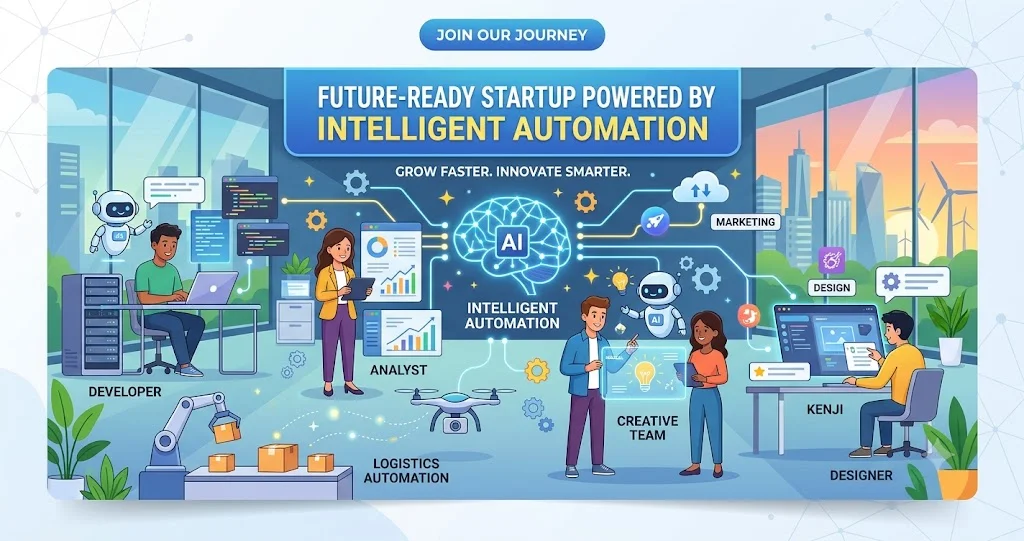
Whether you are a founder, operations manager, or team lead, this resource will help you navigate the modern automation landscape.
Benefits and Limitations of AI Automation
Key Benefits
- Efficiency and Productivity: Automate repetitive tasks such as data entry, scheduling, and customer support, allowing teams to focus on high-impact work.
- Cost Reduction: Minimize labor costs associated with manual processes and reduce errors that lead to expensive rework.
- Scalability: AI systems can handle increasing volumes of work without the need to proportionally scale headcount.
- Data-Driven Insights: AI can analyze large datasets to uncover patterns and inform decision-making, giving startups a strategic advantage.
- 24/7 Operation: AI-powered chatbots and monitoring tools can operate around the clock, improving customer service and system reliability.
Limitations and Challenges
- Implementation Complexity: Integrating AI tools with existing systems can be technically challenging and time-consuming.
- Data Privacy and Security: Handling sensitive data requires robust security measures and compliance with regulations like GDPR.
- Cost of Adoption: While long-term savings are significant, initial setup costs for AI solutions can be a barrier for some startups.
- Dependence on Quality Data: AI models are only as good as the data they are trained on; poor data quality leads to poor outcomes.
- Ethical and Bias Concerns: AI systems can inadvertently perpetuate biases present in training data, requiring careful oversight.
Types of AI Automation
Startups can choose from several types of AI automation based on their needs and technical maturity. Below is an overview of the most common categories.
| Type | Description | Common Use Cases |
|---|---|---|
| Robotic Process Automation (RPA) | Automates rule-based, repetitive tasks using software bots. | Data extraction, invoice processing, email responses. |
| Machine Learning (ML) Models | Uses algorithms to learn from data and make predictions or decisions. | Demand forecasting, customer segmentation, fraud detection. |
| Natural Language Processing (NLP) | Enables machines to understand and generate human language. | Chatbots, sentiment analysis, document summarization. |
| Intelligent Document Processing (IDP) | Extracts and structures data from unstructured documents. | Contract analysis, form processing, claims management. |
| Computer Vision | Interprets visual information from images and videos. | Quality inspection, facial recognition, inventory tracking. |
Current Trends in AI Automation
Staying informed about trends helps startups make forward-looking decisions. Here are key developments shaping the AI automation space.
- Hyperautomation: The combination of multiple automation tools (RPA, AI, process mining) to automate entire business processes end-to-end.
- Low-Code/No-Code Platforms: Empowering non-technical users to build and deploy automation workflows with minimal coding.
- Generative AI Integration: Using models like GPT to automate content creation, coding assistance, and creative tasks.
- AI-Driven Decision Intelligence: Moving from descriptive analytics to prescriptive recommendations that guide business strategy.
- Edge AI: Running AI algorithms on local devices to reduce latency and enhance privacy.
Essential Features of AI Automation Tools
When evaluating AI automation solutions, startups should look for these core features to ensure they meet current and future needs.
- Ease of Integration: Seamless connectivity with existing software (CRMs, ERPs, communication tools).
- Scalability: Ability to handle growing data volumes and user loads without performance degradation.
- Customizability: Flexible configuration options to adapt to unique business processes.
- Transparency and Explainability: Clear insights into how the AI arrives at decisions, which is critical for trust and compliance.
- Robust Security: Encryption, access controls, and compliance with industry standards.
- User-Friendly Interface: Intuitive dashboards and monitoring capabilities for both technical and non-technical staff.
- Reliable Support and Documentation: Access to training resources, community forums, and responsive customer service.
Real-World Examples: Companies Using AI Automation
Several startups and established companies have successfully implemented AI automation to transform their operations. Here are a few illustrative examples.
- E-commerce Startup: Uses AI-powered chatbots for customer service and ML-based recommendation engines to personalize shopping experiences, resulting in higher conversion rates.
- Fintech Company: Employs IDP to automate loan application processing, reducing approval times from days to hours while improving accuracy in risk assessment.
- Health Tech Firm: Leverages computer vision for medical image analysis and NLP for transcribing patient-doctor interactions, enhancing diagnostic speed and record-keeping.
- Logistics Startup: Applies predictive analytics to optimize delivery routes and warehouse inventory management, cutting fuel costs and improving delivery times.
- SaaS Platform: Uses RPA to automate customer onboarding and billing processes, significantly reducing manual workload for the operations team.
How to Select the Right AI Automation Tools
Choosing the right tools can be overwhelming. This checklist will guide you through a systematic selection process.
Selection Checklist
- Define Objectives: Clearly outline the problems you want to solve and the outcomes you expect.
- Assess Data Readiness: Evaluate the quality, quantity, and accessibility of your data.
- Evaluate Technical Fit: Ensure the tool's architecture matches your IT infrastructure and skillset.
- Consider Total Cost of Ownership: Look beyond initial licensing fees to include implementation, training, and maintenance costs.
- Check Vendor Reputation: Research customer reviews, case studies, and the vendor's track record.
- Request a Proof of Concept (POC): Run a small-scale pilot to validate performance and usability.
- Review Security and Compliance: Verify that the tool meets relevant data protection regulations.
- Plan for Change Management: Prepare your team for new workflows and provide adequate training.
Practical Tips for Implementing AI Automation
Successful implementation requires more than just technology. Follow these tips to maximize your chances of success.
- Start Small: Begin with a single, well-defined process to build confidence and learn from early experiences.
- Involve End-Users: Engage the people who will use the automation daily to gather input and foster buy-in.
- Monitor and Iterate: Continuously track performance metrics and refine your automation workflows based on feedback.
- Maintain Human Oversight: Keep humans in the loop for critical decisions and to handle exceptions that AI cannot manage.
- Document Everything: Maintain clear documentation of processes, configurations, and outcomes to facilitate troubleshooting and scaling.
- Stay Agile: Be prepared to pivot or adjust your automation strategy as your startup grows and market conditions change.
Frequently Asked Questions
1. What is the difference between RPA and AI automation?
RPA focuses on automating rule-based, repetitive tasks without learning or decision-making capabilities. AI automation, on the other hand, uses machine learning and other AI techniques to perform tasks that require perception, reasoning, or learning, enabling more complex and adaptive automation.
2. Is AI automation suitable for early-stage startups with limited budgets?
Yes, many AI automation tools offer flexible pricing models, including pay-as-you-go or free tiers for small volumes. Starting with low-code platforms can also reduce development costs. However, it's important to conduct a cost-benefit analysis to ensure a positive return on investment.
3. How long does it typically take to implement an AI automation solution?
Implementation timelines vary widely based on complexity. Simple RPA bots can be deployed in weeks, while advanced ML models may take several months. A phased approach, starting with a pilot, helps manage time and expectations.
4. What skills are needed to manage AI automation tools?
Basic technical literacy and familiarity with data analysis are beneficial. Many modern tools are designed for business users with minimal coding skills. However, for complex customizations, having access to data scientists or engineers is recommended.
5. How can I ensure my AI automation is ethical and unbiased?
Start by using diverse and representative training data. Regularly audit your AI models for bias and fairness. Involve multidisciplinary teams in the design and review process, and establish clear governance policies around AI usage.
6. Can AI automation fully replace human employees?
AI automation is best viewed as a tool to augment human capabilities, not replace them entirely. It handles repetitive and data-intensive tasks, allowing employees to focus on creative, strategic, and interpersonal work that machines cannot replicate.
7. What are the common pitfalls to avoid when adopting AI automation?
Common pitfalls include underestimating data preparation needs, neglecting change management, setting unrealistic expectations, and failing to integrate automation with existing workflows. Careful planning and stakeholder communication can mitigate these risks.
Conclusion
AI automation presents a transformative opportunity for startups to enhance efficiency, drive innovation, and scale sustainably. By understanding the diverse types of automation available, staying abreast of emerging trends, and following a structured selection and implementation process, startups can harness the power of AI to build modern, resilient workflows. While challenges exist, a thoughtful and phased approach can unlock significant value. We encourage you to start with a pilot project, learn from the experience, and gradually expand your automation footprint. The future of work is intelligent, and with the right strategies, your startup can be at the forefront.