
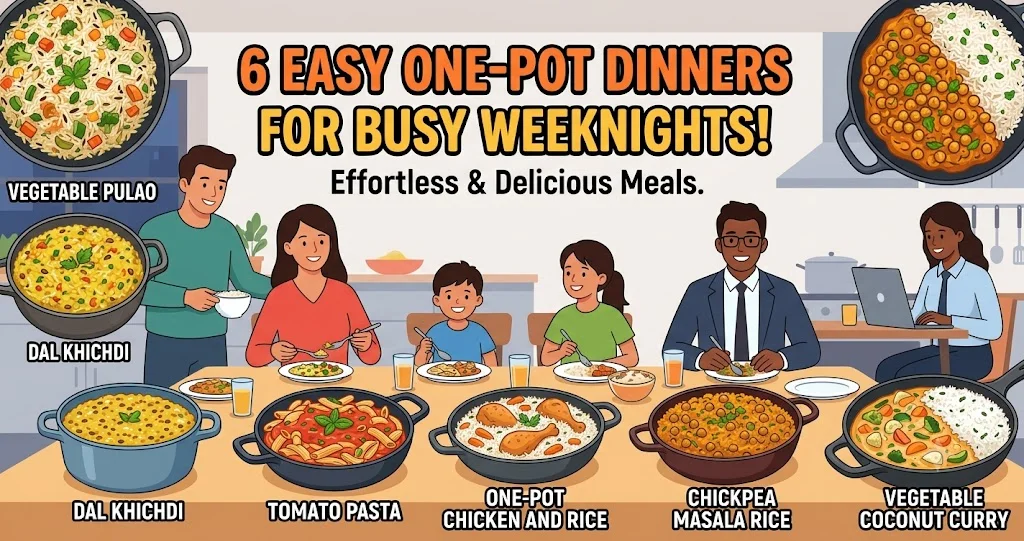
One-pot dinner recipes solve a very ordinary weeknight problem: you want a proper meal, but you do not want several pans competing for space on the stove or a large pile of dishes waiting afterward. The most useful one-pot meals are built around ingredients that can cook together in stages, so the same pot handles the main cooking, simmering, and finishing. The recipes below focus on realistic family dinners with straightforward ingredients, flexible substitutions, and minimal cleanup.
What Makes a Good One-Pot Dinner?
A successful one-pot dinner is more than a recipe where everything is thrown into the same pan at once. Ingredients need to be added in an order that matches their cooking times. Aromatics usually go in first, followed by ingredients that need longer cooking, while quick-cooking vegetables, cooked beans, dairy, herbs, or other delicate ingredients may be added later.
The recipes in this collection use a few different approaches. Rice-based dishes absorb seasoned liquid while they cook, pasta cooks directly in its sauce, and curries build flavor before being finished with vegetables or legumes. This gives you variety without turning dinner into a complicated project.
| Recipe | Approx. total time | Style | Best for |
|---|---|---|---|
| Vegetable Pulao | 35 minutes | Rice-based | Quick family dinner |
| Dal Khichdi | 35 minutes | Lentil and rice | Comforting vegetarian meal |
| One-Pot Tomato Pasta | 30 minutes | Pasta | Simple pantry dinner |
| Chicken and Rice | 45 minutes | Rice and poultry | Complete non-vegetarian meal |
| Chickpea Masala Rice | 30 minutes | Rice and legumes | Meat-free weeknight dinner |
| Vegetable Coconut Curry | 30 minutes | Curry and rice | Flexible vegetable dinner |
1. One-Pot Vegetable Pulao
Preparation time: 10 minutes
Cooking time: 25 minutes
Total time: About 35 minutes
Serves: 4
Ingredients
- 1 1/2 cups basmati rice
- 2 tablespoons oil or ghee
- 1 medium onion, thinly sliced
- 1 teaspoon cumin seeds
- 1 small cinnamon stick
- 2 green cardamom pods
- 2 cloves
- 1 green chilli, slit
- 1 cup mixed vegetables such as carrot, peas, and beans
- 2 1/4 cups water, adjusted according to the rice used
- 1/2 teaspoon turmeric
- 1/2 teaspoon garam masala
- Salt to taste
- 2 tablespoons chopped coriander
Method
- Rinse the rice several times until the water becomes relatively clear. Drain it well.
- Heat oil or ghee in a heavy-bottomed pot. Add cumin, cinnamon, cardamom, and cloves.
- Add onion and cook until lightly golden.
- Add green chilli and mixed vegetables. Cook for 2 to 3 minutes.
- Add rice, turmeric, garam masala, and salt. Stir gently for about 1 minute.
- Add water and bring the mixture to a boil.
- Reduce the heat, cover the pot, and cook until the rice has absorbed the liquid and is tender.
- Turn off the heat and let the pulao rest, covered, for about 5 minutes before fluffing with a fork.
Serving suggestion: Serve with plain yogurt, cucumber raita, pickle, or a simple salad.
Substitutions: Use frozen mixed vegetables instead of fresh vegetables. Basmati rice can be replaced with another long-grain rice, but the amount of liquid and cooking time may need adjustment.
2. One-Pot Dal Khichdi
Preparation time: 10 minutes
Cooking time: 25 minutes
Total time: About 35 minutes
Serves: 4
Ingredients
- 1/2 cup rice
- 1/2 cup yellow moong dal
- 1 small onion, chopped
- 1 small tomato, chopped
- 1 small carrot, diced
- 1 small potato, diced
- 1 tablespoon ghee or oil
- 1 teaspoon cumin seeds
- 1/2 teaspoon turmeric
- 1/2 teaspoon grated ginger
- 5 cups water
- Salt to taste
- 1/2 teaspoon garam masala, optional
- Fresh coriander for serving
Method
- Rinse the rice and moong dal together and drain.
- Heat ghee or oil in a heavy pot. Add cumin and ginger.
- Add onion and cook until softened. Add tomato, carrot, potato, turmeric, and salt.
- Cook the vegetables for 2 to 3 minutes.
- Add the rinsed rice and dal and stir briefly.
- Add water and bring to a boil.
- Cover partially and simmer until the rice, dal, and vegetables are soft. Add more hot water if a looser consistency is preferred.
- Finish with garam masala and coriander.
Serving suggestion: Serve hot with yogurt, pickle, papad, or a spoonful of ghee.
Substitutions: Red lentils can replace moong dal, although the texture and cooking time can change. You can also use vegetables such as spinach, peas, or cauliflower.
3. One-Pot Tomato Pasta
Preparation time: 5 minutes
Cooking time: 25 minutes
Total time: About 30 minutes
Serves: 4
Ingredients
- 300 g pasta
- 1 tablespoon olive oil or regular cooking oil
- 1 medium onion, finely chopped
- 3 garlic cloves, minced
- 1 can crushed tomatoes or about 400 g tomato passata
- 3 cups water or vegetable stock
- 1 teaspoon dried oregano
- 1/2 teaspoon chilli flakes, optional
- 1 cup chopped vegetables such as capsicum, zucchini, or mushrooms
- Salt to taste
- 1/2 cup grated cheese, optional
- Fresh basil or coriander for serving
Method
- Heat oil in a wide, heavy-bottomed pot.
- Add onion and cook until softened. Add garlic and cook briefly without letting it burn.
- Add tomatoes, water or stock, oregano, chilli flakes, and salt.
- Bring the sauce to a simmer and add the dry pasta.
- Cook uncovered or partially covered, stirring regularly so the pasta does not stick together.
- Add the chopped vegetables during the cooking process according to how quickly they soften.
- Continue cooking until the pasta is tender and most of the liquid has become a sauce.
- Turn off the heat and stir in cheese if using.
Serving suggestion: Add fresh basil, coriander, black pepper, or grated cheese just before serving.
Substitutions: Use whole-wheat pasta if preferred, but expect the cooking time and liquid absorption to differ. Canned tomatoes can be replaced with passata or finely chopped fresh tomatoes with suitable liquid adjustment.
4. One-Pot Chicken and Rice
Preparation time: 10 minutes
Cooking time: 35 minutes
Total time: About 45 minutes
Serves: 4
Ingredients
- 500 g boneless chicken pieces, cut into similar-sized pieces
- 1 1/2 cups basmati rice
- 1 medium onion, chopped
- 1 medium tomato, chopped
- 1 cup mixed vegetables such as carrots and peas
- 2 tablespoons cooking oil
- 1 teaspoon cumin seeds
- 1 teaspoon ginger-garlic paste
- 1/2 teaspoon turmeric
- 1 teaspoon coriander powder
- 1/2 teaspoon garam masala
- 2 1/2 cups water or stock, adjusted for the rice
- Salt to taste
- Fresh coriander for serving
Method
- Rinse the rice and drain it well.
- Heat oil in a heavy pot. Add cumin seeds, then add onion and cook until softened.
- Add ginger-garlic paste and cook briefly.
- Add chicken, turmeric, coriander powder, and salt. Cook until the outside of the chicken pieces is no longer raw.
- Add tomato and vegetables and cook for several minutes.
- Add the rinsed rice, garam masala, and water or stock.
- Bring to a boil, then reduce the heat and cover the pot.
- Cook until the rice is tender and the chicken has reached a safe internal temperature.
- Use a food thermometer to verify that poultry reaches at least 165°F (73.9°C), the USDA safe minimum internal temperature for poultry.
- Rest the dish for a few minutes before fluffing and serving.
Serving suggestion: Serve with cucumber raita, sliced onions, lemon wedges, or a simple salad.
Substitutions: Boneless chicken thighs can be used instead of breast meat and generally remain more forgiving during longer cooking. For a vegetarian version, replace chicken with mushrooms, paneer, chickpeas, or additional vegetables and adjust the liquid as needed.
5. One-Pot Chickpea Masala Rice
Preparation time: 10 minutes
Cooking time: 20 minutes
Total time: About 30 minutes
Serves: 4
Ingredients
- 1 1/2 cups cooked chickpeas
- 1 1/2 cups basmati or long-grain rice
- 1 medium onion, chopped
- 1 medium tomato, chopped
- 1 small capsicum, chopped
- 2 tablespoons oil
- 1 teaspoon cumin seeds
- 1 teaspoon ginger-garlic paste
- 1/2 teaspoon turmeric
- 1 teaspoon coriander powder
- 1/2 teaspoon cumin powder
- 1/2 teaspoon garam masala
- 2 1/4 cups water, adjusted according to the rice
- Salt to taste
- Fresh coriander and lemon juice for serving
Method
- Rinse and drain the rice.
- Heat oil in a pot and add cumin seeds.
- Add onion and cook until softened. Add ginger-garlic paste and cook briefly.
- Add tomato, capsicum, turmeric, coriander powder, cumin powder, garam masala, and salt.
- Cook until the tomato softens and the spices are combined.
- Add chickpeas and rice and stir gently.
- Add water and bring to a boil.
- Cover and cook over low heat until the rice is tender and the liquid is absorbed.
- Rest for 5 minutes, then fluff gently and finish with coriander and lemon juice.
Serving suggestion: Serve with plain yogurt, cucumber salad, or roasted vegetables.
Substitutions: Canned chickpeas can be used after draining and rinsing. Cooked kidney beans can also work, although they create a different texture and flavor.
6. One-Pot Vegetable Coconut Curry With Rice
Preparation time: 10 minutes
Cooking time: 20 minutes
Total time: About 30 minutes
Serves: 4
Ingredients
- 1 tablespoon cooking oil
- 1 medium onion, sliced
- 1 teaspoon grated ginger
- 1 small green chilli, optional
- 2 cups mixed vegetables such as carrot, beans, cauliflower, and peas
- 1 teaspoon cumin seeds
- 1/2 teaspoon turmeric
- 1 teaspoon coriander powder
- 1 cup coconut milk
- 1 1/2 cups cooked rice
- 1/2 cup water, adjusted as needed
- Salt to taste
- Fresh coriander or curry leaves for serving
Method
- Heat oil in a wide pot and add cumin seeds.
- Add onion, ginger, and green chilli and cook until the onion softens.
- Add the vegetables, turmeric, coriander powder, and salt.
- Cook for several minutes, stirring occasionally.
- Add coconut milk and enough water to create a loose curry. Bring to a gentle simmer.
- Cover and cook until the vegetables are tender but not mushy.
- Fold in the cooked rice and warm through for several minutes.
- Finish with coriander or curry leaves and adjust seasoning before serving.
Serving suggestion: Add lime juice and fresh coriander just before serving.
Substitutions: Use light coconut milk or a mixture of coconut milk and water if you prefer a thinner curry. Tofu or chickpeas can replace some of the vegetables for a different version.
How to Keep One-Pot Cooking From Going Wrong
Because everything cooks in the same vessel, timing matters more than it does in many multi-pan meals. A few simple habits make the recipes more predictable.
- Use the right pot: A heavy-bottomed pot or deep, wide pan distributes heat more evenly and gives rice and pasta enough room to cook.
- Do not guess the liquid blindly: Rice, pasta, vegetables, and different brands of grains absorb different amounts of liquid. Start with the recipe's suggested amount and adjust based on the specific ingredient.
- Cut ingredients consistently: Similar-sized vegetables cook at roughly the same rate, reducing the chance of having some pieces raw while others are overcooked.
- Do not overcrowd the pot: Too many ingredients can slow cooking and make it harder for moisture to evaporate.
- Stir pasta more often: Pasta cooked directly in sauce can stick more easily than pasta boiled separately.
- Let rice rest: A short covered resting period after cooking helps redistribute moisture before you fluff it.
- Season in stages: Add some seasoning during cooking and adjust at the end rather than relying entirely on a final correction.
Practical Substitution Guide
| If you are out of... | Try... | What may change |
|---|---|---|
| Fresh mixed vegetables | Frozen mixed vegetables | Cooking time may be shorter |
| Chickpeas | Cooked kidney beans | Texture and flavor |
| Basmati rice | Another long-grain rice | Liquid and cooking time |
| Paneer or tofu | Cooked chickpeas or mushrooms | Protein and texture |
| Coconut milk | Plain yogurt added off the heat | Flavor and consistency |
| Chicken | Chickpeas, mushrooms, paneer, or tofu | Cooking time and seasoning |
How to Reduce Cleanup Even Further
The biggest advantage of one-pot cooking is not just using one cooking vessel. You can also reduce the number of preparation bowls and utensils by organizing ingredients before turning on the stove.
- Read the recipe first: Put ingredients into groups based on when they are added.
- Use one cutting board: For vegetarian recipes, prepare the vegetables together and keep them organized in separate small piles if they enter the pot at different times.
- Measure dry ingredients before cooking: This avoids repeatedly opening containers while the pot is already hot.
- Choose recipes around what is available: A flexible vegetable pulao or chickpea rice is easier than making a special shopping trip for one missing ingredient.
- Serve from the cooking pot when practical: A Dutch oven, kadai, or attractive deep pan can go directly to the table after cooking.
Safe Storage for One-Pot Leftovers
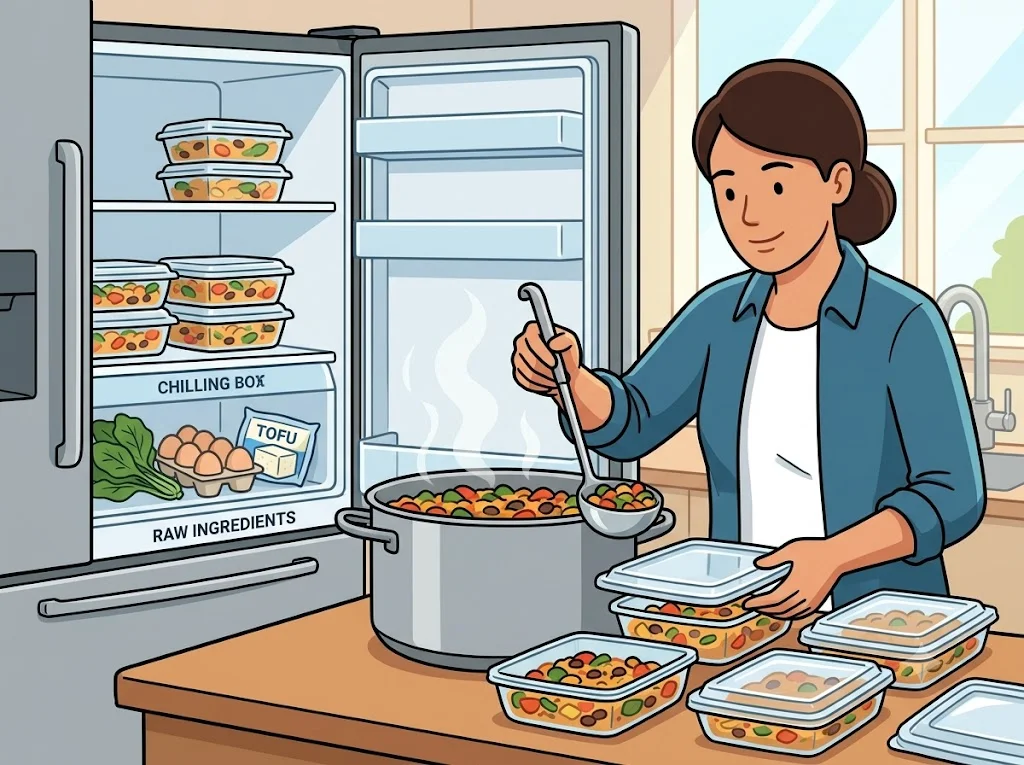
One-pot meals often produce leftovers, but storing them safely matters just as much as cooking them. FSSAI consumer guidance advises refrigerating perishable foods promptly and recommends not leaving cooked food at room temperature for more than two hours.
- Transfer leftovers into clean, covered containers rather than leaving the whole cooking pot sitting out for an extended period.
- Divide a large quantity into smaller, shallow containers so it can cool more efficiently.
- Keep cooked food separate from raw ingredients to reduce cross-contamination.
- For dishes containing poultry, make sure the chicken is fully cooked before serving. USDA guidance identifies 165°F (73.9°C) as the safe minimum internal temperature for poultry.
- Reheat stored food thoroughly before serving. FSSAI guidance specifically recommends thorough reheating of stored cooked food.
Choosing the Right Recipe for the Night
Use the recipe based on what the evening actually looks like rather than choosing solely by cooking time. Vegetable pulao and chickpea masala rice work well when rice is already part of the meal plan. Dal khichdi is useful when you want a soft, simple one-pot meal. Tomato pasta is a practical pantry option. Chicken and rice gives you a more substantial non-vegetarian dinner but needs careful cooking of the poultry. Coconut vegetable curry is useful when you have a mixture of vegetables that needs using.
| Your situation | A practical choice |
|---|---|
| You want a vegetarian rice meal | Vegetable pulao |
| You want rice and lentils together | Dal khichdi |
| You have pasta in the pantry | One-pot tomato pasta |
| You want chicken and rice | One-pot chicken and rice |
| You have cooked chickpeas | Chickpea masala rice |
| You need to use assorted vegetables | Vegetable coconut curry with rice |
Frequently Asked Questions
What is the easiest one-pot dinner for a busy weeknight?
One-pot tomato pasta and chickpea masala rice are among the simpler choices because their ingredients are easy to combine and they do not require separate cooking of multiple main components. The best choice also depends on what ingredients are already available.
Can I make one-pot recipes without a Dutch oven?
Yes. A heavy-bottomed saucepan, deep skillet, kadai, or other suitably sized pot can work. The important considerations are enough capacity, a secure lid when the recipe requires covered cooking, and even heat distribution.
Why does my one-pot rice become mushy?
Common causes include using too much liquid, cooking for too long, using a rice variety with different absorption characteristics, or stirring too much while the rice cooks. Start with the liquid amount specified for the rice you are using and adjust in future batches.
Can I substitute vegetables in one-pot recipes?
Usually, yes. Choose vegetables with similar cooking times or add harder vegetables earlier and softer vegetables later. Frozen vegetables can also work in many rice and curry recipes, although they may release additional moisture.
Can I turn these recipes vegetarian?
Several recipes can be adapted easily. Replace chicken with chickpeas, paneer, tofu, mushrooms, or additional vegetables. Because these ingredients cook differently from raw chicken, adjust the cooking time and liquid rather than following the original chicken timing exactly.
How long can cooked one-pot food stay at room temperature?
FSSAI consumer food-safety guidance advises not leaving cooked food at room temperature for more than two hours and recommends prompt refrigeration of perishable food.
A Simpler Weeknight Dinner Routine
The strongest reason to keep one-pot dinner recipes in your regular rotation is not that every meal becomes effortless. It is that they reduce the number of moving parts: fewer cooking vessels, fewer separate components, and fewer dishes to clean. Keep one rice-based recipe, one lentil or bean recipe, one pasta recipe, and one flexible vegetable curry in rotation. Then change the vegetables, seasonings, or protein according to what is available. That approach gives busy families and working professionals a practical set of dinners without requiring a completely new cooking system every night.