

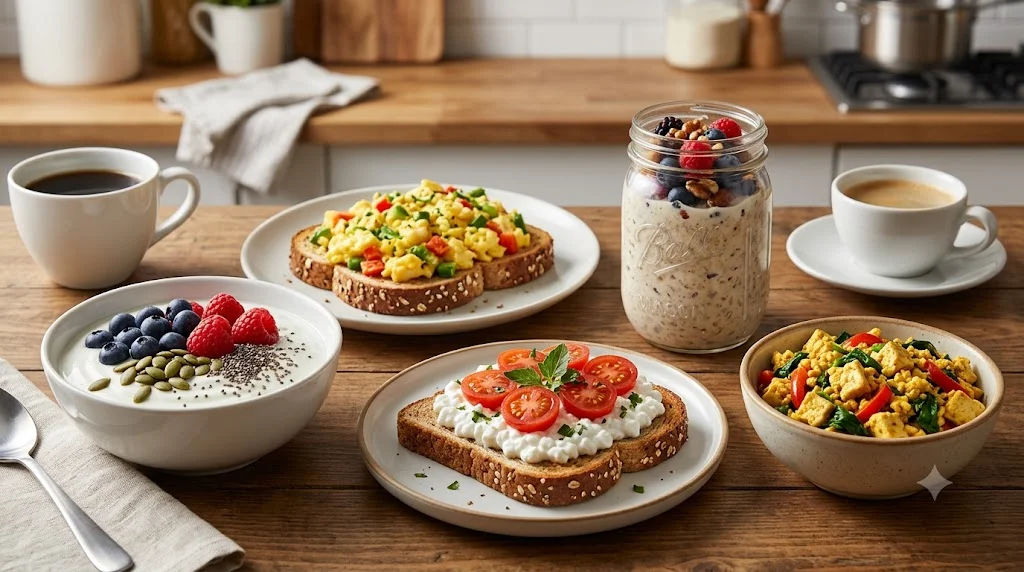
Busy mornings often leave little time for cooking, but breakfast does not need to be complicated to be satisfying. The easiest approach is to keep a few protein-rich ingredients ready and combine them with foods such as oats, whole-grain bread, fruit, vegetables, nuts, or seeds. These high protein breakfast ideas are designed around short preparation times, simple ingredients, and recipes that can be adjusted for different tastes.
How to Build a Practical High-Protein Breakfast
A useful breakfast is more than simply adding a protein ingredient. A balanced plate can combine a protein-rich food with fiber-rich carbohydrates, fruit or vegetables, and a source of unsaturated fat when appropriate. Harvard's Nutrition Source notes that the overall food package matters, not just the amount of protein in isolation. Protein can come from foods such as eggs, yogurt, beans, lentils, tofu, nuts, seeds, fish, and poultry.
You also do not need to rely on protein powders for every breakfast. Whole foods can provide protein along with other nutrients, and the best choice depends on your dietary pattern, preferences, and individual nutritional needs.
1. Greek Yogurt Berry Breakfast Bowl
This is one of the easiest options when there is no time to cook. Greek yogurt provides a convenient protein-rich base, while berries, oats, and seeds add texture and variety.
Ingredients
- 1 cup plain Greek yogurt
- 1/2 to 1 cup berries, fresh or frozen and thawed
- 2 tablespoons rolled oats
- 1 tablespoon chia or ground flaxseed
- 1 tablespoon chopped nuts or seeds
- Cinnamon to taste
Preparation
- Add Greek yogurt to a bowl.
- Top with berries, oats, seeds, and nuts.
- Finish with cinnamon and serve.
Approximate time: 5 minutes.
Serving suggestion: Prepare the dry toppings in small containers the night before and add them just before eating.
Substitutions: Use plain dairy-free yogurt with a suitable protein content if you avoid dairy. Sunflower or pumpkin seeds can replace nuts.
2. Vegetable Egg and Toast Breakfast
Eggs can turn a simple piece of toast into a more substantial breakfast. Adding vegetables also makes the meal more varied without requiring a complicated recipe.
Ingredients
- 2 eggs
- 1 slice whole-grain bread
- 1/4 cup chopped bell pepper
- 1/4 cup chopped spinach or other quick-cooking greens
- 1 teaspoon cooking oil
- Black pepper and herbs to taste
Preparation
- Heat the oil in a small pan.
- Add the bell pepper and cook briefly until slightly softened.
- Add the spinach and stir until wilted.
- Beat the eggs, add them to the pan, and cook until firm throughout.
- Toast the bread and serve with the eggs.
Approximate time: 8–10 minutes.
Serving suggestion: Add sliced tomato or a piece of fruit for extra produce.
Substitutions: Use mushrooms, onions, zucchini, or leftover cooked vegetables instead of bell pepper and spinach.
3. Overnight Protein Oats
Overnight oats are useful when the morning schedule is unpredictable because the main preparation happens the night before. Yogurt, milk, seeds, and oats create a convenient combination that can be eaten cold.
Ingredients
- 1/2 cup rolled oats
- 1/2 cup milk or an unsweetened milk alternative
- 1/2 cup plain Greek yogurt
- 1 tablespoon chia seeds
- 1/2 banana or a handful of berries
- Cinnamon to taste
Preparation
- Combine oats, milk, yogurt, and chia seeds in a jar or container.
- Stir thoroughly.
- Cover and refrigerate overnight.
- Add fruit and cinnamon before serving.
Approximate time: 5 minutes of preparation, plus overnight refrigeration.
Serving suggestion: Make two or three portions at once if your refrigerator space and food-storage routine allow it.
Substitutions: Use mashed banana for sweetness, or replace chia seeds with ground flaxseed. Adjust the liquid if the oats become thicker than you prefer.
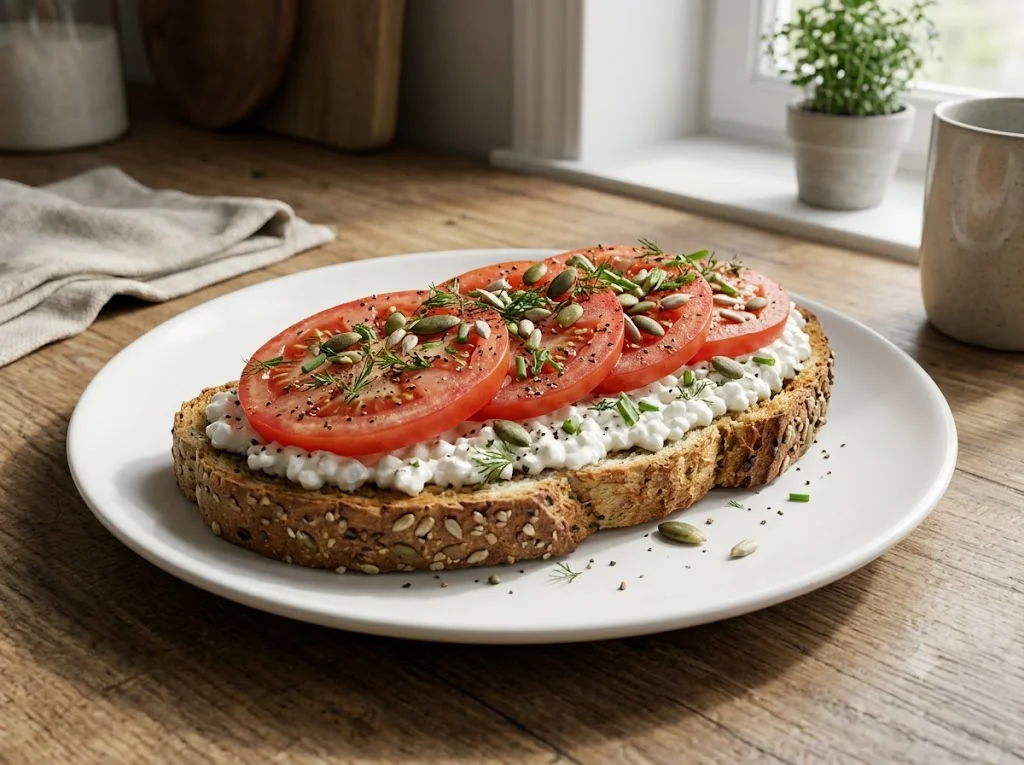
4. Cottage Cheese and Tomato Toast
Cottage cheese can be used as a quick savory topping for toast. The combination needs almost no cooking, making it particularly useful for mornings when even a short pan-cooking session feels inconvenient.
Ingredients
- 1 or 2 slices whole-grain bread
- 1/2 cup cottage cheese
- Sliced tomato
- Black pepper
- Fresh herbs or dried oregano
- Optional pumpkin or sunflower seeds
Preparation
- Toast the bread.
- Spread cottage cheese over the toast.
- Add tomato slices and season with pepper and herbs.
- Top with seeds if desired.
Approximate time: 5 minutes.
Serving suggestion: Pair with fruit if you want a sweet component alongside the savory toast.
Substitutions: Use mashed avocado beneath the cottage cheese, or replace tomato with cucumber, roasted peppers, or leftover vegetables.
5. Chickpea Breakfast Toast
Chickpeas provide plant-based protein and fiber and can be turned into a quick spread without cooking if canned chickpeas are already available.
Ingredients
- 1/2 cup cooked chickpeas
- 1 or 2 slices whole-grain bread
- 1 teaspoon lemon juice
- 1 teaspoon tahini or olive oil
- Pinch of cumin
- Black pepper
- Optional chopped cucumber or tomato
Preparation
- Mash the chickpeas with lemon juice, tahini or olive oil, cumin, and pepper.
- Spread the mixture over toasted bread.
- Add chopped vegetables if desired.
Approximate time: 7 minutes.
Serving suggestion: Prepare the chickpea mixture ahead and refrigerate it in a covered container.
Substitutions: Use white beans instead of chickpeas, or replace tahini with a small amount of plain yogurt for a different texture.
6. Quick Tofu Scramble
Tofu works well in a savory breakfast scramble and is an adaptable option for people who do not eat eggs. The recipe can use whatever vegetables are already available.
Ingredients
- 150–200 g firm tofu
- 1/4 cup chopped bell pepper
- 1/4 cup chopped onion
- 1/2 cup spinach
- 1 teaspoon cooking oil
- 1/4 teaspoon turmeric, optional
- Black pepper and herbs to taste
Preparation
- Drain the tofu and crumble it with a fork.
- Heat oil in a pan and cook the onion and bell pepper for a few minutes.
- Add tofu and optional turmeric.
- Cook until heated through and lightly browned.
- Stir in spinach and cook until wilted.
Approximate time: 10–12 minutes.
Serving suggestion: Serve with whole-grain toast or a small portion of cooked grains.
Substitutions: Use mushrooms, tomatoes, zucchini, or leftover roasted vegetables in place of the listed vegetables.
7. Make-Ahead Egg Muffins
Egg muffins are useful when you want a cooked breakfast that can be prepared in batches. They can be customized with vegetables and served on their own or with toast and fruit.
Ingredients
- 6 eggs
- 1/2 cup chopped bell pepper
- 1/2 cup chopped spinach
- 1/4 cup chopped onion
- Optional small amount of grated cheese
- Black pepper and herbs
Preparation
- Preheat the oven to 375°F (190°C).
- Lightly grease a six-cup muffin pan.
- Whisk the eggs and mix in the vegetables and optional cheese.
- Divide the mixture among the muffin cups.
- Bake until the eggs are firm throughout.
- Cool promptly and refrigerate portions that will not be eaten immediately.
Approximate time: 20–25 minutes, including preparation and baking.
Serving suggestion: Pair one or more egg muffins with whole-grain toast and fruit for a fuller breakfast.
Substitutions: Use mushrooms, broccoli, corn, or leftover cooked vegetables. For a dairy-free version, simply omit the cheese.
8. Peanut Butter Banana Oatmeal
Oatmeal becomes more substantial when paired with peanut butter, milk, seeds, and fruit. It is also easy to adjust according to what is already in the pantry.
Ingredients
- 1/2 cup rolled oats
- 1 cup milk or an unsweetened milk alternative
- 1 tablespoon peanut butter
- 1/2 banana, sliced
- 1 tablespoon chia, flax, or pumpkin seeds
- Cinnamon
Preparation
- Combine oats and milk in a saucepan.
- Cook over medium heat until the oats reach your preferred consistency.
- Stir in peanut butter.
- Top with banana, seeds, and cinnamon.
Approximate time: 7–10 minutes.
Serving suggestion: Use a jar or lidded container if the oatmeal needs to be transported, but allow it to cool appropriately before sealing for storage.
Substitutions: Use almond, cashew, or sunflower seed butter. If using a sweetened milk alternative, you may not need additional sweeteners.
A Simple Way to Plan Breakfast for the Week
The easiest way to make these recipes practical is to prepare components rather than trying to cook a complete breakfast every morning.
| Preparation level | Useful options | Morning effort |
|---|---|---|
| No-cook | Greek yogurt bowl, cottage cheese toast, chickpea toast | Very low |
| Night before | Overnight oats, pre-portioned toppings | Very low |
| Batch cooking | Egg muffins, boiled eggs | Low on busy mornings |
| Quick cooking | Egg scramble, tofu scramble, oatmeal | About 5–12 minutes |
A practical weekly routine might involve preparing one make-ahead option, keeping yogurt and fruit available, washing or chopping a few vegetables, and keeping bread, oats, nuts, seeds, or canned beans in the pantry. This reduces the number of decisions required before work or school.
How to Keep Breakfast Interesting
Using the same basic protein source every morning can become repetitive. Instead, rotate between dairy, eggs, tofu, beans, nuts, and seeds. You can also switch between sweet and savory breakfasts.
- Sweet: yogurt with berries, overnight oats, or peanut butter oatmeal.
- Savory: egg toast, tofu scramble, cottage cheese toast, or chickpea toast.
- Vegetarian: tofu, beans, lentils, yogurt, eggs, nuts, and seeds can provide different options.
- Family-friendly: keep toppings separate so each person can assemble the breakfast they prefer.
The goal is not to make every breakfast identical in nutrition. Variety makes it easier to include different foods throughout the week.
Food Safety for Make-Ahead Breakfasts
Recipes containing eggs and dairy need appropriate refrigeration. The FDA advises keeping eggs refrigerated and cooking eggs until the yolk and white are firm. Cooked egg dishes should be refrigerated promptly rather than left at room temperature for extended periods. For dishes containing eggs, use reliable food-safety guidance rather than judging doneness by appearance alone.
For make-ahead meals, cool cooked foods appropriately, store them in clean covered containers, and keep perishable foods refrigerated. If a recipe contains raw or undercooked egg, use pasteurized egg products where appropriate and follow the relevant food-safety instructions.
Common Mistakes With High-Protein Breakfasts
Making protein the only priority
A breakfast does not become automatically balanced simply because it contains a large amount of protein. Consider adding fruit, vegetables, whole grains, nuts, or seeds depending on the meal.
Depending on processed meat every day
Bacon and processed breakfast meats are convenient, but they do not need to be the default source of protein. Beans, tofu, eggs, yogurt, nuts, seeds, fish, or poultry can provide alternatives, depending on the meal and dietary pattern.
Adding more ingredients than the morning allows
A recipe that takes 30 minutes may not be realistic on a workday. Keep weekday breakfasts simple and reserve more involved recipes for days when you have extra time.
Ignoring individual dietary needs
Protein requirements vary with factors such as body size, age, activity level, and health circumstances. A general breakfast recipe cannot establish an appropriate protein target for every person.
Frequently Asked Questions
What is an easy high-protein breakfast for a busy morning?
Greek yogurt with berries and seeds, cottage cheese toast, overnight oats, and chickpea toast require little or no morning cooking. Egg muffins can also work well when prepared in advance.
Can a vegetarian breakfast be high in protein?
Yes. Vegetarian breakfasts can use Greek yogurt, cottage cheese, eggs, tofu, chickpeas, beans, nuts, seeds, and other protein-containing foods. Combining different plant foods across the day can also provide a broad range of amino acids.
Can I prepare high-protein breakfast recipes the night before?
Yes. Overnight oats are specifically designed for advance preparation, while yogurt toppings and chickpea spreads can also be prepared ahead. Cooked egg dishes should be refrigerated promptly and handled according to food-safety guidance.
Do I need protein powder to make breakfast high in protein?
No. Protein powder is optional. Foods such as eggs, yogurt, cottage cheese, tofu, beans, nuts, seeds, and milk can contribute protein without requiring a supplement.
What can I use instead of Greek yogurt?
Depending on the recipe, plain yogurt, cottage cheese, or a suitable dairy-free yogurt can work. Check the nutrition label of alternatives because protein content can vary considerably between products.
How can I make breakfast easier for a family?
Prepare flexible components such as cooked eggs, yogurt, fruit, toast, oats, or chickpea spread and let each person combine them differently. Keeping toppings separate can make one base recipe work for several preferences.
The Practical Takeaway
The most useful high-protein breakfast is usually the one that fits your actual morning. Choose two or three reliable options, keep their main ingredients available, and use make-ahead preparation when cooking time is limited. Rotating between eggs, dairy, tofu, legumes, nuts, seeds, and whole grains can keep breakfasts varied without requiring elaborate recipes.
Protein is one part of the meal rather than the entire meal. Building breakfast around a protein-rich food and adding produce, whole grains, or other nutritious foods can make a simple breakfast more varied and practical for everyday eating.