

Hydration is easy to overlook because drinking fluids is usually something we do between other activities rather than a task that feels important on its own. Yet adequate fluid intake helps the body maintain normal temperature, lubricate and cushion joints, remove waste, and perform other routine functions. The useful question is not simply “How many glasses of water should everyone drink?” but “What hydration routine works for my needs, environment, and daily habits?”
What hydration actually means
Hydration refers to maintaining enough water and other fluids in the body for normal physiological function. Your total water intake does not come only from a glass or bottle of plain water. Beverages and foods, particularly foods with high water content, also contribute to total water intake. The National Academies' reference values therefore describe total water, rather than treating plain drinking water as the only source.
For healthy adults, fluid needs are not identical from one person to another. The National Academies reported an adequate intake for total water of about 3.7 liters per day for men and 2.7 liters for women ages 19–30, with roughly 3.0 and 2.2 liters respectively coming from beverages in the population data used for those values. These figures are population-based adequate-intake values, not fixed daily requirements for every individual. The same source notes that people who are physically active or exposed to hot environments may require more.
Why everyday hydration matters
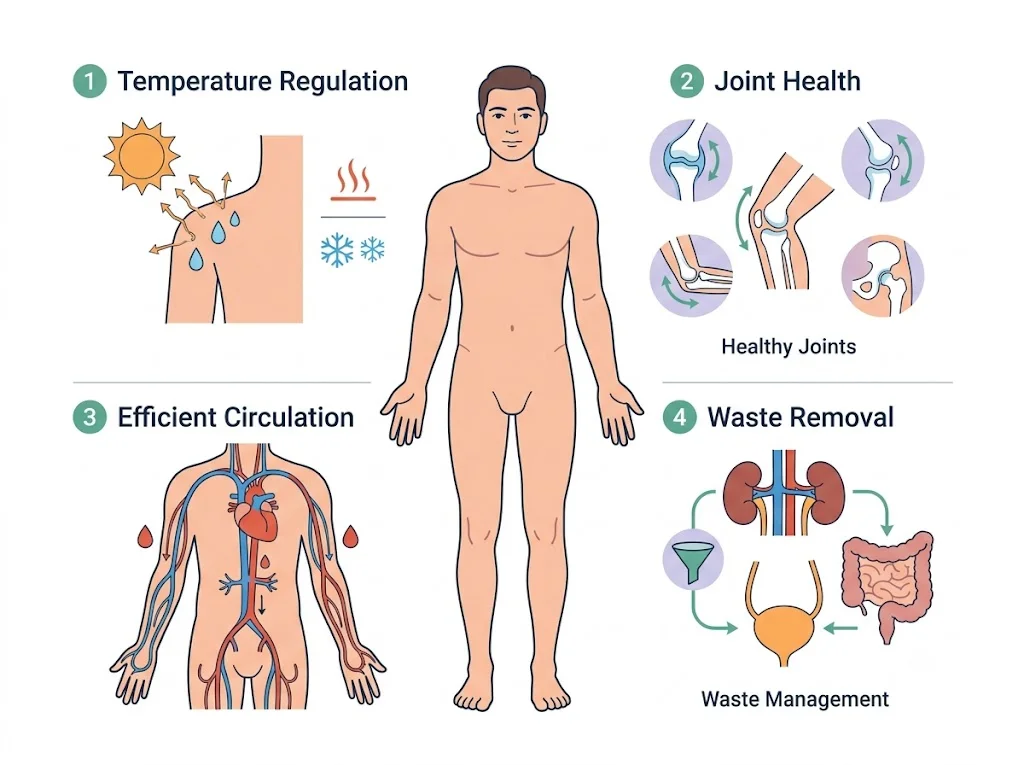
Water plays several basic roles throughout the body. The CDC notes that adequate water intake helps prevent dehydration and supports normal body functions, including temperature regulation, joint lubrication and cushioning, protection of sensitive tissues, and removal of waste through urination, perspiration, and bowel movements.
Temperature regulation
The body loses water through processes such as sweating. In hot conditions or during physical activity, those losses can increase, making regular fluid intake more important. The amount needed can therefore change from day to day rather than remaining fixed.
Normal physical function
Water contributes to everyday physiological processes, including transporting substances through the body and eliminating waste. Maintaining adequate fluid intake is therefore part of ordinary nutrition and self-care rather than a special wellness practice.
Everyday comfort and concentration
Dehydration can be associated with symptoms such as thirst, dry mouth, tiredness, dizziness or light-headedness, reduced urination, and dark-colored urine. The CDC also notes that dehydration may contribute to unclear thinking and mood changes. These symptoms are not specific to dehydration in every situation, so persistent or severe symptoms should not automatically be attributed to inadequate water intake.
Healthy hydration habits are more practical than rigid targets
A common mistake is treating hydration as a challenge to consume a particular amount regardless of circumstances. A more useful approach is to build regular drinking into the day and adjust fluid intake when conditions change.
- Drink regularly: Spreading fluids across the day is generally more practical than waiting until you are very thirsty.
- Keep water accessible: A reusable bottle at your desk, in a bag, or during travel can make drinking easier.
- Use meals as reminders: Having water with meals creates a simple routine that does not depend entirely on remembering to drink.
- Adjust for activity and heat: Hot weather, exercise, fever, vomiting, and diarrhea can increase fluid losses and therefore increase hydration needs.
- Consider the whole diet: Water-rich foods such as fruits and vegetables contribute to total fluid intake.
How to tell whether your routine may need attention
Thirst is one useful signal, but it is not the only practical observation. The NHS advises most people to drink enough throughout the day for their urine to be a clear pale yellow color. Dark yellow, strong-smelling urine and urinating less often than usual can be signs associated with dehydration.
Other possible signs include dry mouth, tiredness, dizziness, light-headedness, and excessive thirst. Severe dehydration can become a medical problem, particularly when fluid losses occur through repeated vomiting or diarrhea.
Common hydration misconceptions
Misconception 1: Everyone needs exactly the same amount of water
There is no single daily amount that fits every healthy adult. Fluid needs vary with age, sex, pregnancy or breastfeeding status, activity, environmental temperature, illness, and other factors. The National Academies' adequate-intake values are not intended to be interpreted as a precise requirement for every individual.
Misconception 2: Only plain water counts
Plain water is an easy choice, but it is not the only source of fluids. Water, milk, unsweetened beverages, tea, coffee, and other drinks can contribute to fluid intake, while foods also provide water. What matters is the overall pattern and whether the choices fit a healthy diet.
Misconception 3: Caffeinated drinks automatically cause dehydration
The National Academies notes that beverages containing caffeine can contribute to total water intake and that any diuretic effect observed with caffeine may be transient. This does not mean every caffeinated beverage is an ideal everyday choice, because its sugar, calorie, caffeine, or other nutritional content also matters.
Misconception 4: Sports and energy drinks are necessary for ordinary hydration
For everyday situations, plain water is often a straightforward hydration choice. The CDC notes that many sports drinks and energy drinks contain added sugar, while energy drinks may also contain substantial amounts of caffeine and other stimulants. The appropriate drink depends on the situation, including activity level and duration, rather than assuming a specialized beverage is always needed.
Misconception 5: Drinking as much water as possible is always better
More is not automatically better. Hydration should be appropriate to the body's needs rather than treated as a competition to consume excessive amounts. People with certain medical conditions or those taking medicines that affect fluid balance may have individualized fluid requirements and should follow advice from their healthcare professional.
Choosing drinks that support a healthy hydration routine
Hydration and beverage quality are related but not identical questions. A drink can contribute fluid while also adding sugar, calories, caffeine, or other ingredients. The CDC recommends choosing water instead of sugary drinks when practical and notes that plain water contains no calories.
| Drink or source | How it fits into hydration | Practical consideration |
|---|---|---|
| Plain water | Direct source of fluid | A simple everyday option with no calories |
| Unsweetened tea or coffee | Contributes to fluid intake | Consider total caffeine intake and individual sensitivity |
| Milk or unsweetened fortified alternatives | Provides fluid plus nutrients | Consider the nutritional profile and overall diet |
| Water-rich foods | Contribute water through food | Useful as part of an overall balanced diet |
| Sugary drinks | Provide fluid | Also add sugar and calories, so they are not equivalent to plain water as an everyday choice |
Simple ways to build better hydration habits
- Start the day with a routine. Keep water available when you begin work, school, or other daily activities.
- Attach drinking to existing habits. Try having water with meals or after regular breaks rather than relying on memory alone.
- Carry a refillable bottle. Convenience can remove one of the simplest barriers to drinking regularly. The CDC specifically recommends carrying a reusable water bottle.
- Make plain water more appealing. Lemon, lime, cucumber, berries, or sparkling water can provide variety without requiring a sugary drink.
- Increase attention during heat and exercise. Hot environments and physical activity can increase water losses through sweating. Plan access to fluids rather than waiting until the end of the activity.
- Pay attention during illness. Fever, vomiting, and diarrhea can increase fluid losses. If significant fluid loss occurs, ordinary drinking may not always be enough, and medical or pharmacist guidance may be appropriate.
When hydration needs extra attention
Some circumstances make dehydration more likely or make its consequences more serious. Older adults, for example, can be at increased risk. Fluid losses from vomiting or diarrhea can also become significant. The NHS recommends seeking medical help for concerning symptoms such as persistent dizziness when standing, unusually severe tiredness, very dark urine, or markedly reduced urination.
Persistent excessive thirst should also not simply be treated by continually increasing water intake. The NHS notes that ongoing excessive thirst can have causes that require medical evaluation.
People with medical conditions that affect fluid balance, kidney function, heart function, or hormone regulation may have different hydration instructions. Individual medical advice should take priority over general hydration guidance.
A practical hydration checklist
- Do I have easy access to water during the day?
- Do I drink regularly rather than waiting until I feel very thirsty?
- Do I adjust my fluid intake when I exercise or spend time in hot conditions?
- Am I getting fluids from a mix of beverages and water-rich foods?
- Are sugary drinks replacing water frequently?
- Have I noticed persistent signs that could indicate dehydration?
- Do I have a medical condition or medication that changes how much fluid I should consume?
Frequently asked questions
How much water should an adult drink each day?
There is no single amount appropriate for every adult. Total water intake includes water from beverages and food, and needs vary with factors such as activity, temperature, age, sex, pregnancy, breastfeeding, and illness. Population reference values should not be treated as a universal prescription.
Is urine color a useful hydration indicator?
Urine color can provide a practical indication. The NHS advises drinking enough during the day for urine to be a clear pale yellow color, while dark yellow urine can be associated with dehydration. It should be considered alongside other symptoms and circumstances rather than used as a diagnostic test.
Do tea and coffee count toward fluid intake?
Yes. Tea and coffee contribute to total fluid intake. The National Academies notes that caffeine's potential diuretic effect does not mean caffeinated beverages simply fail to hydrate the body. However, beverage composition and individual caffeine tolerance still matter.
Can food contribute to hydration?
Yes. Foods contain water and can contribute meaningfully to total water intake. Fruits, vegetables, soups, and other water-containing foods can therefore be part of an overall hydration pattern.
Should I drink more water when exercising?
Physical activity increases fluid losses, particularly when sweating heavily, so hydration needs can increase. Hot environments can increase those needs further. The appropriate amount depends on the activity and conditions rather than a single rule for every workout.
What should I do if I have signs of dehydration?
Drink fluids and pay attention to whether symptoms improve. If dehydration is associated with significant vomiting or diarrhea, severe symptoms, fainting, confusion, inability to keep fluids down, or persistent concerning symptoms, seek medical care rather than relying solely on general hydration advice.
The practical takeaway
Healthy hydration habits do not require obsessing over a single daily water number. A better approach is to drink regularly, keep fluids accessible, choose water frequently, include water-rich foods, and adjust intake when heat, exercise, or illness increases fluid loss. At the same time, persistent or severe symptoms should not automatically be blamed on hydration. For most people, a consistent routine that responds to everyday conditions is more practical than following a rigid target.